Went out and got the first batch of clams and cockles from both sites the past few days (8/09 westcott, 8/11 agate pass). Here are the rough counts (counted while in bags so may be off by 1 or 2):
Westcott Manilas
Control Temp: n=134
Elevated Temp: n=130
Control + Poly: n=135
Elevated + Poly: n=163
Agate Pass Manilas
Control Temp: n=11
Elevated Temp: n=19
Control + Poly: n=20
Elevated + Poly: n=32
Agate Pass Cockles
Control Temp: n=39
Elevated Temp: n=37
Control + Poly: n=30
Elevated + Poly: n=37
While the retrieval numbers for westcott were great, obviously the numbers for agate weren’t quite as hoped…
Prelim Assays
Objective: Assess differences in survival and metabolism between primed and control groups under thermal stress.
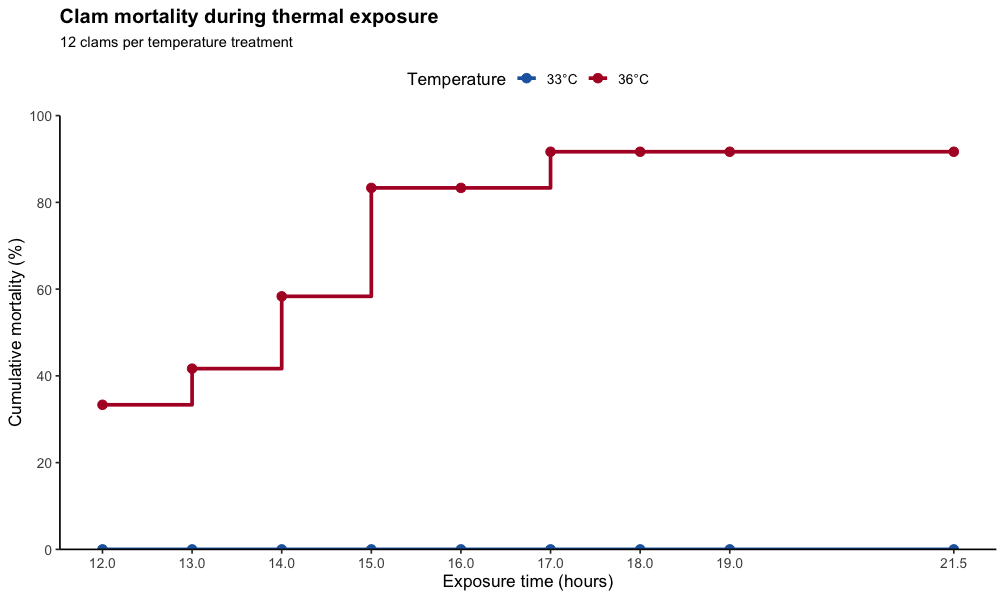
Pilot survival assay (n=12 per temp), observations from 12hr-21.5hr:
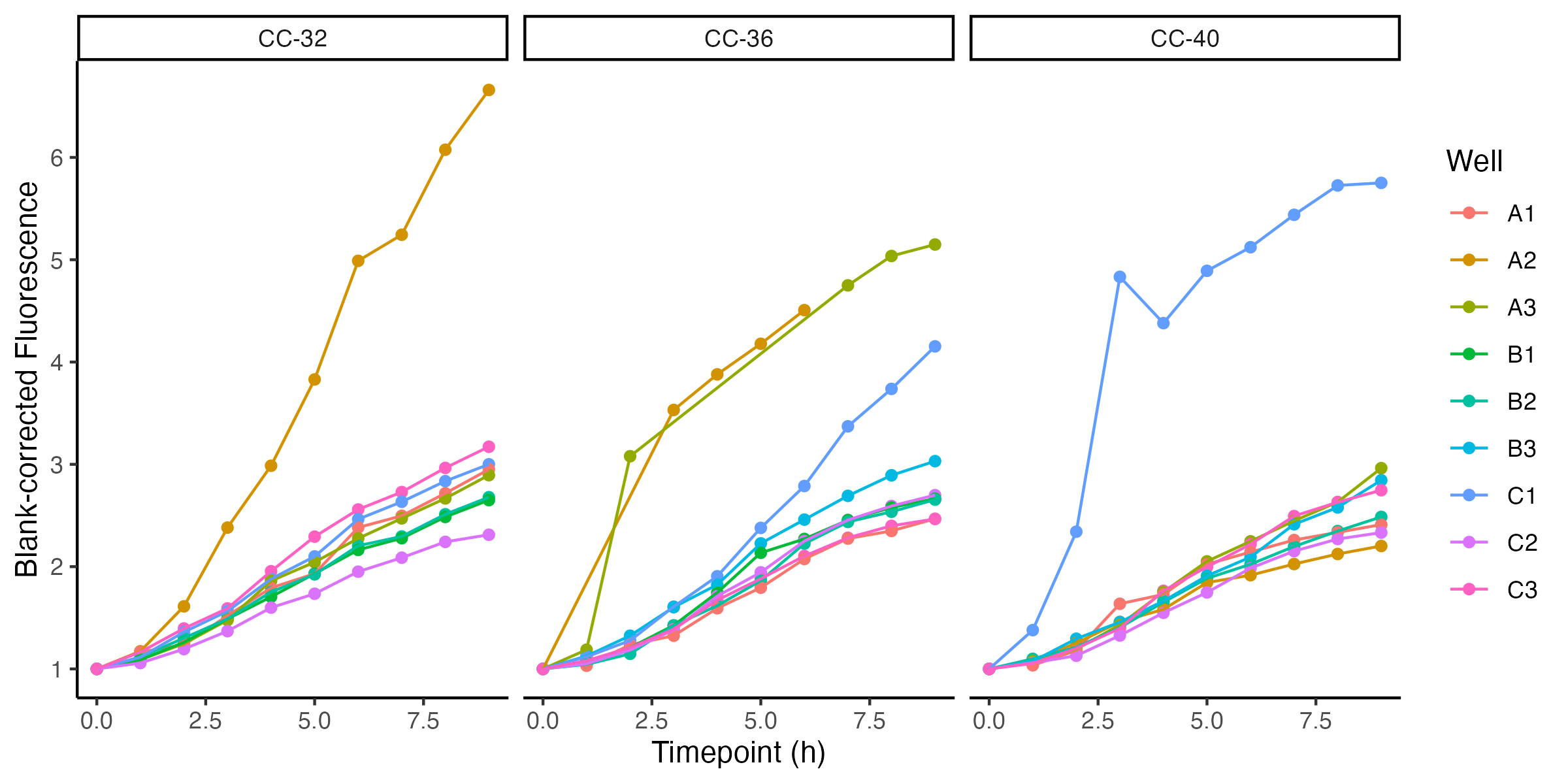
Pilot resazurin assay (n=9 per temp) showed the following (2.5hr at 25C followed by 4 hours at labeled temp):
github repo here (see /test2 subdirs within code/ data/ and figures/)
Assay Options
Option 1/“Plan A”:
- 4 temps: 25C, 30C, 35C, 40C for manilas. 15, 20, 25, 30 for cockles
n = 30 per temp
Procedure
Put in treatment temp for 4hrs, measuring fluorescence every 30 min
at the end of 4hrs, put in at-temp seawater in fresh well plate. check mortality hourly (or every 2hrs?) from 8-24hr
only possible for westcott manilas & lab clams and lab cockles
Option 2:
3 temps: 25C*, 33C, 40C for manilas. 20*, 25, 30 for cockles (* = starting temp)
n (per temp) = 40 (lab manilas, westcott manilas, lab cockles), n = 15 agate cockles
Procedure
put in starting temp for 4hr - readings every 30 min. after, put in fresh resazurin and at higher target temps (33&40 or 25&30) for 4 hours. readings every 30 minutes
at the end of 4hrs, put in at-temp seawater in fresh well plate. check mortality hourly (or every 2hrs?) from 8-24hr
would be possible for westcott manilas, lab manilas, agate cockles, lab cockles
Option 3 (super limited assay):
2 temps: 25C* and 35C* for manilas, 15*, and 25C for cockles (* = starting temp)
n (per temp) = 60 (lab manilas, westcott manilas, lab cockles), n = all :( for agate cockles and manilas
Procedure
put in starting temp for 4hr - readings every 30 min. after, put in fresh resazurin and at higher target temps (33&40 or 25&30) for 4 hours. readings every 30 minutes
at the end of 4hrs, put in at-temp seawater in fresh well plate. check mortality hourly (or every 2hrs?) from 8-24hr
Would be possible for all groups
Option 4 (combination):
Option 1 (Plan A) for groups that allow it (lab manilas, lab cockles, and westcott manilas).
Option 3 (limited assay) for agate manilas and agate cockles
- “higher target temp,” can be based on which temp showed the “peak” fluorescence in the option 1 groups
this would allow us to do a greater range of temperature testing for the groups that have the capacity to test them, and then using that information to selectively test a temperature for the groups that have reduced capacity.
- ie., we could glean “differences across a range of temperatures” for the lab groups + westcott manilas and “differences between treatments at a singular temperature” for the agate pass groups
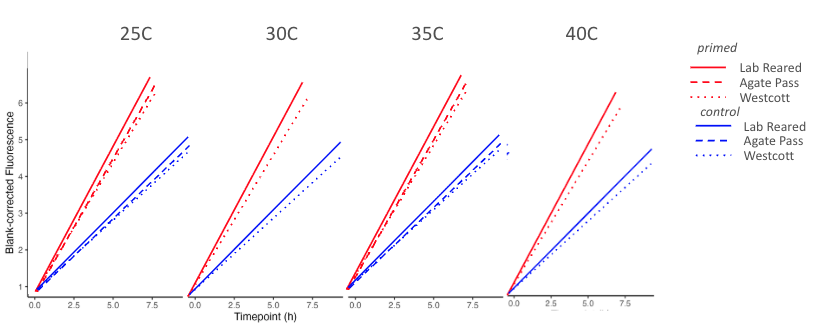
Here’s a potential figure that would come from pursuing option 4: